

With gas prices always in the spotlight, there are a few common questions drivers ask:
Who sets prices? Why do they vary so much? How much is tax? And how much does a station actually make?
Here’s a straightforward look at how it all works.
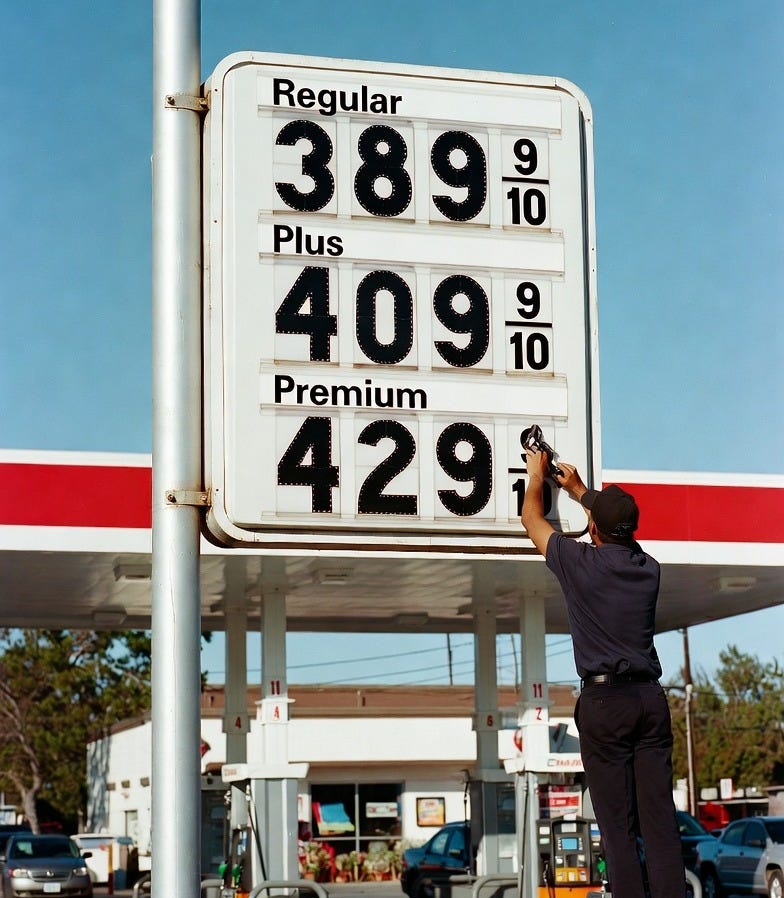
1. How Gas Stations Determine Prices
Gas stations don’t set prices in a vacuum—they react to both costs and competition.
At the core, retail prices are driven by:
Wholesale fuel costs (rack prices), which can change daily—or even multiple times per day. These are ultimately driven by shifts (and even perceived shifts) in the global balance of supply and demand
Local competition, often within just a few blocks
Price cycling behavior in some markets, where stations start the cycle by raising prices and then slowly undercut each other a few cents every day for usually a week or so before raising prices back up or even to higher amounts if wholesale prices have seen significant gains
Brand positioning (major brand vs. independent)
Traffic patterns and convenience (busy corners can charge more)
Stations typically use a “follow the leader” model in their immediate area. If a nearby competitor drops prices, others often follow quickly to avoid losing volume.
Importantly, stations are usually price takers, not price makers—they react to market conditions rather than control them.
2. Why Prices Vary (Station to Station, State to State)
Price differences can be dramatic, even within the same city. That comes down to several factors:
Local (station-to-station):
Rent and real estate costs
Volume (high-volume stations can accept lower margins)
Brand premiums
Proximity to highways vs. neighborhoods
Timing of last fuel delivery (one station may have bought cheaper inventory)
Regional/state differences:
Fuel specifications (California’s stricter blends cost more)
Supply logistics (pipeline access vs. trucked-in fuel)
Distance from refineries
Status of regional supply and demand
Market structure (isolated vs. well-connected regions)
This is why the Gulf Coast tends to be cheapest (close to refining hubs and lower taxes), while the West Coast and Northeast are often highest (more isolated and more exposed to global market dynamics).
3. How Much of Gas Prices Are Taxes?
Taxes are a significant—but often misunderstood—portion of the price.
Federal gas tax:
Gasoline: 18.4 cents per gallon
Diesel: 24.4 cents per gallon
State taxes (vary widely):
Typically range from ~15 cents to over 60 cents per gallon
When including fees and environmental programs, some states (like California) can exceed $1 per gallon in total taxes and fees
National average (gasoline):
Roughly 30–35 cents per gallon in state taxes
Combined with federal: about 50–55 cents per gallon total
That means taxes generally account for ~10%–20% of the retail price, depending on the state and market conditions.
4. How Much Does a Gas Station Make Per Gallon?
This is one of the biggest misconceptions.
On average:
Typical margin: ~15–35 cents per gallon
High-efficiency / high-volume stations: up to ~30–40 cents per gallon
Low-volume / independent stations: often much lower
But margins aren’t fixed—they depend heavily on price direction:
Rising prices:
Stations often lose margin temporarily because their replacement cost is higher than what they’re currently selling forFalling prices:
Stations may gain margin briefly as they sell higher-cost inventory before lowering prices
Most stations rely far more on inside sales (snacks, drinks, etc.) for profit than fuel itself.
Bottom Line
Gas prices are the result of a complex mix of wholesale costs, logistics, taxes, and hyper-local competition.
And while prices can feel unpredictable, there’s a clear pattern underneath:
Global exposure → more volatility
Distance from supply → higher costs
Competition → tighter margins
Understanding that helps explain why prices don’t just change—they vary so much depending on where you are.
That was interesting. I think what frustrates consumers is how quickly prices go up as soon as crude oil prices soar, but when crude drops, it takes time for prices to come down as the cheaper oil needs time to make its way through the supply chain.
Thanks again for another very informative post.