
The Pump Reaction Is Accelerating: Oil Risk Premium Deepens, Retail Prices Respond

Oil markets are climbing again this morning as geopolitical risk around the Strait of Hormuz intensifies.
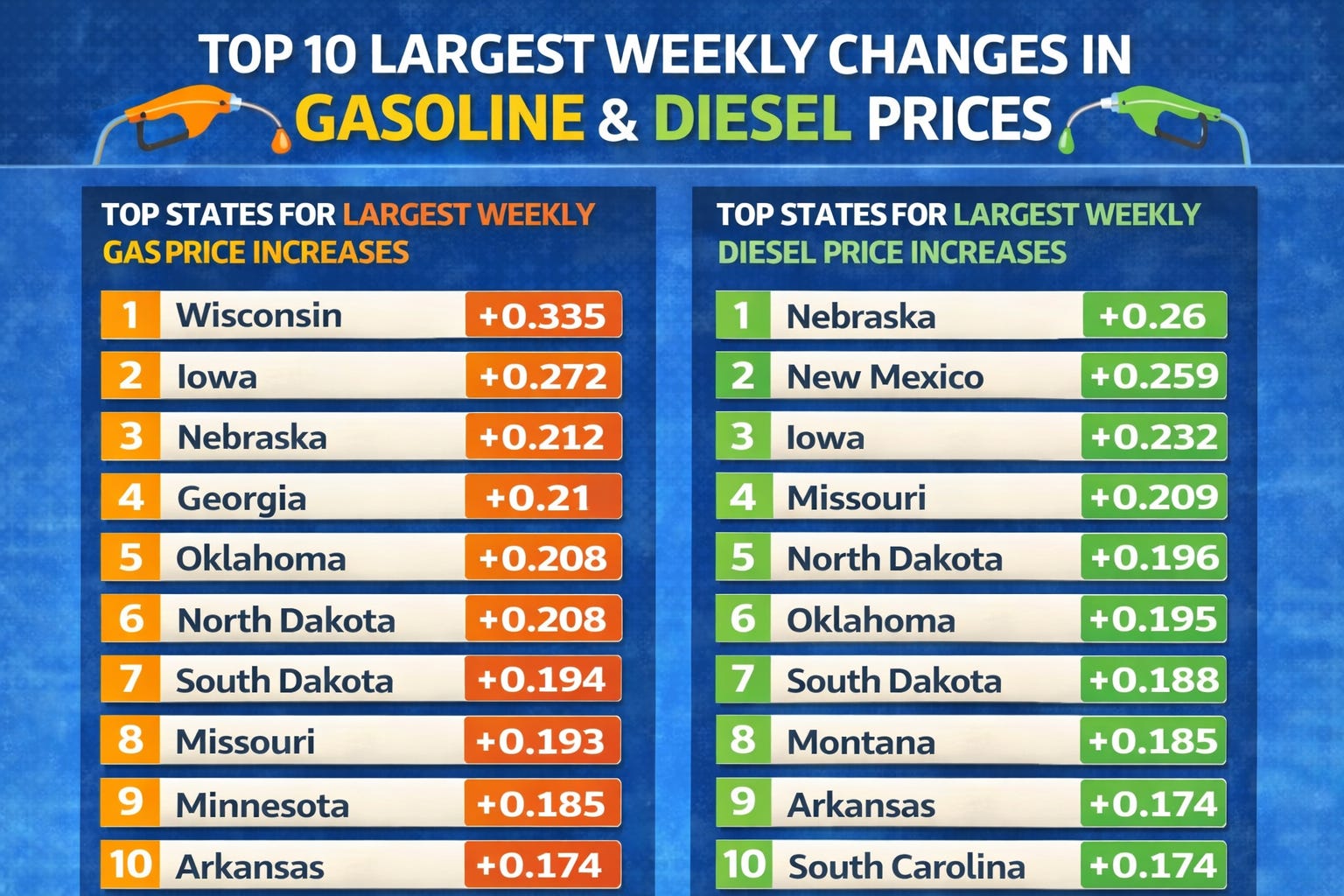
At press time:
WTI crude is up about $5 per barrel (roughly 7%) to $76.23/bbl
Brent crude is up $5.17 to $82.91/bbl, after touching $85 earlier — its highest level since summer 2024
Gasoline spot prices are up another 12.5¢/gal this morning (5.3%)
Diesel spot prices are up another 34.7c/gal this morning (12.0%)
Nearly all of this move is associated with elevated risk as Iran threatens vessels transiting the Strait of Hormuz.
Even without confirmed large-scale physical disruption, the Strait — which handles over 20% of global crude flows — is effectively acting as a choke point. When risk rises around that corridor, markets price in the possibility of constrained flows immediately.
Risk alone can function like a supply restriction.
Retail Prices Are Responding — And Quickly
GasBuddy data shows:
The national average price of gasoline has risen above $3.00 per gallon for the first time in 2026 (since late November).
Monday marked the largest single-day increase since March 4, 2022.
The national average is now higher than it was a year ago.
Every state except Hawaii is up compared to a month ago.
Diesel has moved even more sharply:
The national average price of diesel climbed to $3.86 per gallon early Tuesday, the highest level since May 2024.
With wholesale gasoline up another 12.5¢/gal this morning and diesel markets tightening further, we expect:
The national average gasoline price could rise another 10–25¢/gal over the next week or two, barring de-escalation.
In price cycling markets, some localized increases could exceed that range during routine resets.
Why Retail Gas Prices Don’t “Wait”
A common question during events like this is:
“If crude oil takes weeks to ship and refine, why do prices rise immediately?”
Because retail fuel prices are based on replacement cost, not historical cost.
Gas stations don’t price fuel based on what they paid last week. They price it based on what it will cost to replace their next load.
Here’s how the sequence works:
Oil futures rise.
Spot gasoline and diesel prices adjust almost immediately.
Rack (wholesale) prices move later that day.
Retail stations adjust to reflect the new replacement cost.
The crude physically in transit may have been purchased weeks ago. But the market sets the value of the next barrel today.
That’s why retail prices move quickly — they’re forward-looking.
Why Diesel Is Outpacing Gasoline
The diesel jump to $3.86 reflects tighter distillate fundamentals.
Diesel markets are more globally interconnected and highly sensitive to shipping risk and maritime disruption. With elevated tension in a key global shipping corridor, diesel is reacting more aggressively than gasoline.
What Happens Next
This move is currently being driven by:
Elevated Strait of Hormuz risk
Higher shipping and insurance costs
Summer gasoline transition
Early refinery maintenance
Rising seasonal demand
If tanker flows are materially disrupted, prices could rise further.
If maritime security stabilizes and flows normalize, some of this risk premium could unwind.
For now, however, the pump reaction is not only underway — it’s accelerating.
I’ll continue monitoring wholesale markets, refinery utilization, tanker traffic, and spot pricing closely. If fundamentals shift meaningfully, expectations will adjust accordingly.