

Good morning readers- it’s been a volatile last 24 hours with oil and energy markets opening for electronic trading, but today is the day the full market will reopen and reaction and volatility may be more significant. Let’s get into the pricing angle now that the wheels will begin to turn at the retail level for gasoline and diesel. We now have real numbers to analyze — not just hypotheticals.
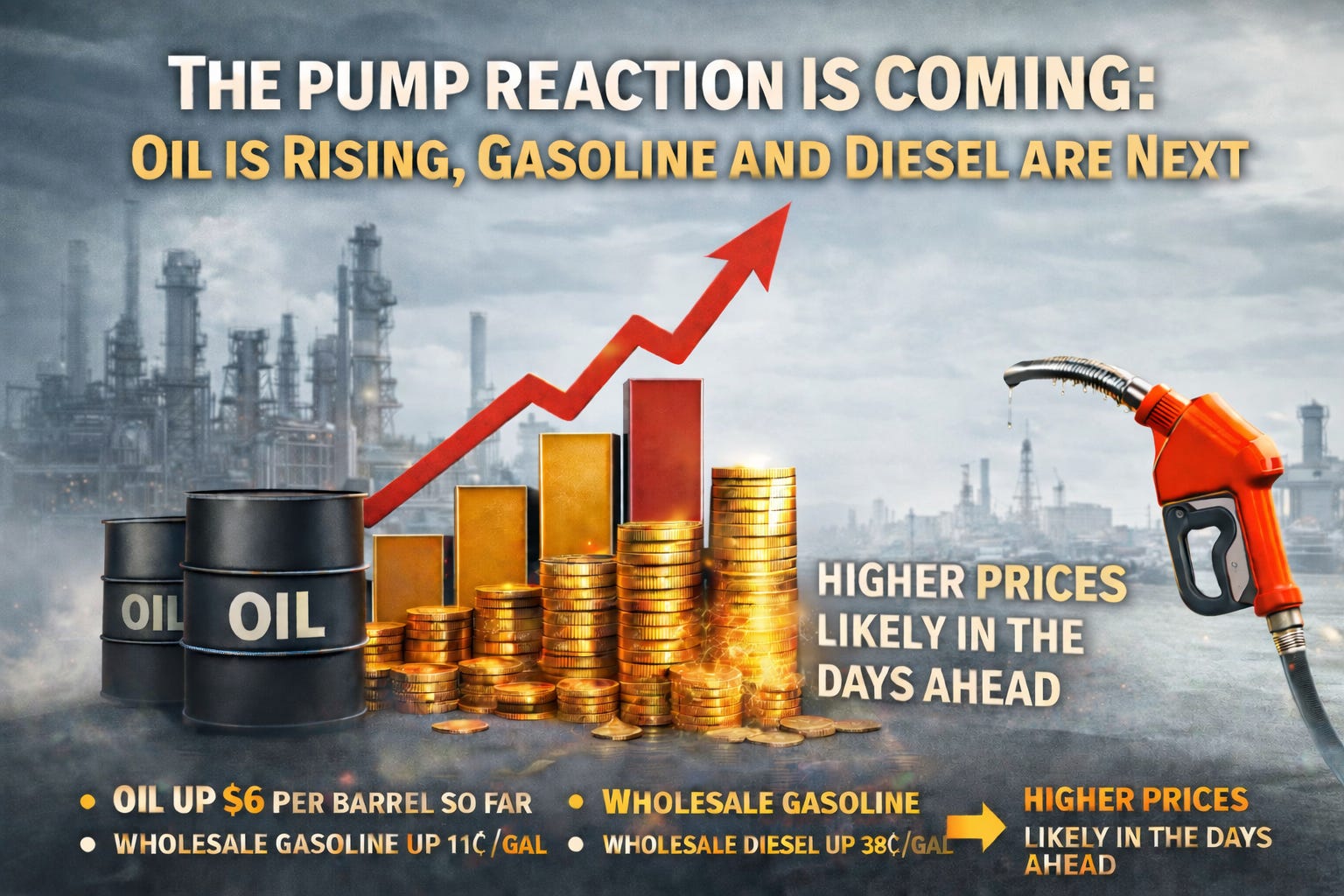
So far:
WTI and Brent crude are up roughly $5–$6 per barrel
Wholesale gasoline is up about 11¢ per gallon
Wholesale diesel has jumped roughly 38¢ per gallon
That’s a meaningful move — particularly on the diesel side — but it’s important to keep it in context.
This is a risk premium being layered onto an already tightening seasonal market. It is not, at this stage, a structural supply shock.
A Clarification on “Immediate” Price Moves
On Saturday, I said I did not expect an immediate rise in gas prices.
That statement was about timing — specifically that we would not see prices jump Saturday or Sunday before oil and wholesale markets had reopened and adjusted.
From the beginning, I’ve said retail prices would likely begin rising Monday once wholesale costs moved.
Some media coverage is now quoting Saturday’s comment without that timing context. To be clear: I do expect prices to begin inching higher in most states today or tomorrow — and in some markets, that process is already underway.
Oil moves first. Rack prices follow. Retail adjusts after that.
That sequence hasn’t changed.
What Happens Next at the Pump
Most states will likely see gas prices begin to rise at some point today or tomorrow.
For many stations, increases may be gradual — measured in pennies or maybe a nickel or dim at first. But over the coming week, I expect:
Average stations: 10–30 cents per gallon increases
Price cycling markets: potentially 30–85 cents per gallon jumps at individual stations (the lower priced stations will see higher increases as prices converge)
That upper range isn’t unusual in cycling markets. Those areas routinely see sharp resets when stations move from the bottom of a pricing cycle to the top. When that coincides with rising wholesale costs, the jump can look dramatic — especially for stations that had been priced aggressively low.
Context matters.
This Isn’t Just About Iran
The Iran situation is adding volatility and risk premium, but it’s landing on top of an already firming market.
We are currently in:
The transition to summer gasoline blends, which cost more to produce
The early phase of refinery maintenance season, limiting output
A period of seasonally rising demand
Those forces were already pushing wholesale gasoline higher.
The geopolitical premium simply accelerates the move.
That’s why gasoline is up ~11¢ wholesale — not 50¢.
That’s why crude is up $5–$6 — not $20.
And that’s why retail prices will rise — but not in runaway fashion, barring new developments.
Why Diesel Is Moving More
Diesel’s ~38¢ wholesale increase stands out.
Distillate markets are structurally tighter than gasoline, and they tend to respond more aggressively to geopolitical risk because of global trade sensitivity and shipping exposure.
That doesn’t automatically translate into 38¢ at the pump — but it does signal that underlying distillate fundamentals are tighter. Truckers and diesel consumers will likely see fairly swift increases that may be measured in dimes per day this week as stations pass along the rise in price. Average diesel prices could rise 20-35c/gal this week (or more, or less as the market moves).
What Would Change the Outlook
Right now, this is a risk premium, not confirmed lost supply.
The trajectory changes materially if we see:
Sustained disruption to tanker traffic
Confirmed infrastructure damage to major exporters
Escalation that pulls in additional regional producers
A sharp spike in shipping or insurance costs that materially restricts flows
Absent those, increases should remain measured.
Volatility? Yes.
Explosive structural repricing? Not yet.
Bottom Line
Retail prices are beginning to respond — exactly as expected once wholesale markets adjusted.
Most drivers should prepare for gradual increases this week. Cycling markets may see sharper resets. Low-priced stations will likely move first and more visibly.
This is the combination of:
Geopolitical risk
Seasonal transition
Refinery maintenance
Rising demand
Not one factor — but all of them together.
I’ll continue watching rack prices, refinery utilization, and tanker flows. If the fundamentals shift meaningfully, the outlook will shift with them.
Measured analysis still beats headline-driven forecasts.
Does the increase in the crude price has an effect on the Russian oil market? Does it help their war effort against Ukraine?