

With gasoline and especially diesel prices skyrocketing as of late, politicians in certain quarters are eager to shift the narrative around record-setting diesel prices ahead of elections. Washington is now reaching for the first temptation to quickly address a fuel price spike: an export ban. Senate Majority Leader John Thune says he’s “open to exploring one”. The logic sounds perfect and airtight to many Americans- if we keep what diesel is produced here, we can flood our market and drive prices down, right? Not so fast.
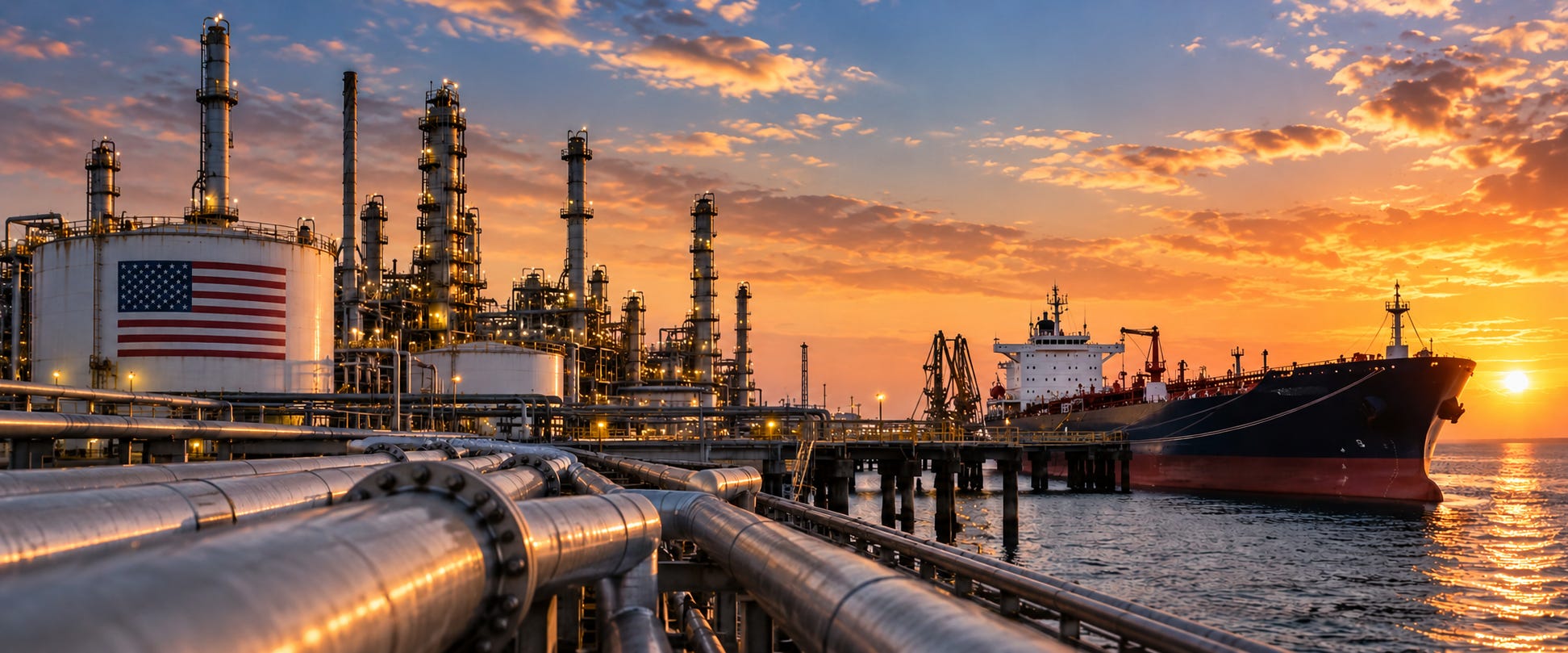
As an analyst, the intuition breaks the moment you look at the plumbing behind it. An export ban could temporarily depress Gulf Coast diesel prices, but there’s no guarantee that relief reaches the regions with the highest prices, and over time it could cut refinery runs and tighten supplies of other fuels, gasoline included. Here’s why.
The U.S. is not short of diesel. The world is. The U.S. is a structural diesel surplus producer. Refineries in the U.S. produce roughly 5.3 million barrels of distillates per day against demand of around 3.6 million barrels per day domestically. The current price spike here and globally is not a U.S. problem- it’s not a domestic shortfall. It’s a global one, being driven largely by Ukrainian drone strikes on Russian refining capacity, in one of the most significant diesel producers in the world, a country that typically supplies one in nine barrels of the world’s diesel, compounded by the conflict with Iran closing the Strait of Hormuz, blocking Middle East refiners from coming to the rescue, and even then it would still be impactful.
The distinction matters since U.S. diesel prices are determined not by a U.S. supply and demand balance, but a global one. Keeping distillates and diesel home does not change the world price that reference our prices. You can’t fence off a globally traded commodity by executive order and expect the global price to stop applying to it.
Even setting aside the global picture, an export ban is about geography. The excess diesel and distillate is on the Gulf Coast while the pain sits on the Northeast and West Coast, areas that lean on waterborne shipments and imports since they lack enough local supply, and more recently, the Great Lakes due to some refinery snags. In normal times, moving Gulf diesel to the Northeast by water is expensive, and generally constrained by the (waived) Jones Act, which limits how much product flows between U.S. ports. Well, we’re obviously not in normal times, and this is where the export ban case falls apart. The current broad Jones Act waiver has been in place since March, the longest waiver I believe in history, and it has already done what a ban can’t. Gulf Coast to East Coast shipments hit a record in April, rising above 200,000bpd, with similar spikes to West Coast shipments. The Jones Act waiver is already doing a lot of work here, moving the surplus to where it’s needed.
However, even with that flexibility and the waiver in place, distillates kept flowing to export markets because global export margins are more profitable than moving products coast to coast. That’s the point. Supplies leave because the world is paying more, not because politicians are forcing them to. An export ban would shove that diesel back into a domestic market that’s already well supplied, risking refinery run cuts, while doing nothing about the global shortage that is actually the mechanism leading diesel prices to record levels.
The real vulnerability is more so time, not trade policy. The Jones Act waiver expires November 15 and will now require case-by-case federal approval before each voyage, which means the Jones Act constraint that I mention above will be back in force just in time for heating oil season, when it would perhaps be most impactful as winter demand peaks. The fix here would be smarter logistics policy, not an export ban that treats a shipping and pricing problem as a hoarding problem.
Obviously, a ban will then invite evasion because “diesel” is hard to ultimately define perfectly. Is it traditional “diesel” meant for vehicles, or is it heating oil to heat homes? What sulfur content would be allowed to be exported and what wouldn’t? They’re chemically almost identical. Jet fuel is also a cousin, and refiners have real flexibility to shift diesel production to jet fuel and then export that instead. Distillate blendstocks and unfinished products could also still then be shipped out and finished abroad. If politicians draw the ban narrowly, these channels would be where leaks happen. Draw a ban more broadly and there’s more damage on refinery economics while not plugging all the gaps. There’s no clean line here because the product is a continuum.
Export bans are usually quick to go into place and slow to unwind, bringing lasting damage:
Refineries built their units in the Gulf specifically to serve global markets. Signaling that exports can be controlled for political convenience or to “drive prices down” discourages investment and will accelerate the refinery closures underway. Regulation is part of why refineries in California have called it quits. More closures weaken future supply security. A policy that’s sold as bringing prices down and strengthening the U.S. would quietly do the exact opposite.
The U.S. spent years becoming the world’s backstop for diesel supply. Telling every buyer from South America to Europe that American supply is politically conditional pushes them to diversify away from U.S. refineries and U.S. supplies, softening long-term demand for U.S. product and foregoing political leverage. Just as how Canada is already now eyeing new pipelines to carry its crude oil away from Midwestern U.S. markets. This will be painful if this trend continues.
It could reopen the debate the country settled in 2015 when President Obama and Congress lifted the 40-year ban on U.S. crude oil exports and allowed the U.S. to become an energy exporter.
So, would anything actually help? If the goal is bringing down diesel prices, the Jones Act waiver as I mentioned above is probably the best tool- extending it beyond mid-November would help the U.S. see a more level playing field. If it expires, it will hurt the Northeast and West Coast the most, and those areas could see prices spike. The bottom line is this: the U.S. is not short of diesel. The world is. A potential export ban treats the global price problem as if it was a U.S. only problem, and the cure would be far worse than the disease.
I appreciate your viewpoint, but with 2 wars a diesel export ban to some degree is appropriate or at least a requirement that the crack margin for diesel production sold in the US is brought down to a level that is still profitable but closer to pre-war margins. Still very profitable for producers but not the current record margins. This is a wartime situation and some adjustments are reasonable and necessary.
Agreed, and the export ban is one of a list of levers that share the same flaw: each buys weeks,
and each buys fewer weeks than the last. That pattern, the same cure applied harder for less
effect, is the one I would position around rather than any single measure. Good letter on it
across the whole cycle.
https://read.solsticelabs.com/re-entry-corridor-2-35